
PYRFOROS IV / Drivetrain · Prometheus Eco Racing (NTUA)
Motor & Drivetrain — Mechanical Design.
The mechanical side of PYRFOROS IV's in-house drive motor and the 6:1 belt drivetrain around it — an architecture sized by lap simulation that cut powertrain mass by 20 kg against the prior generation's direct axle drive.
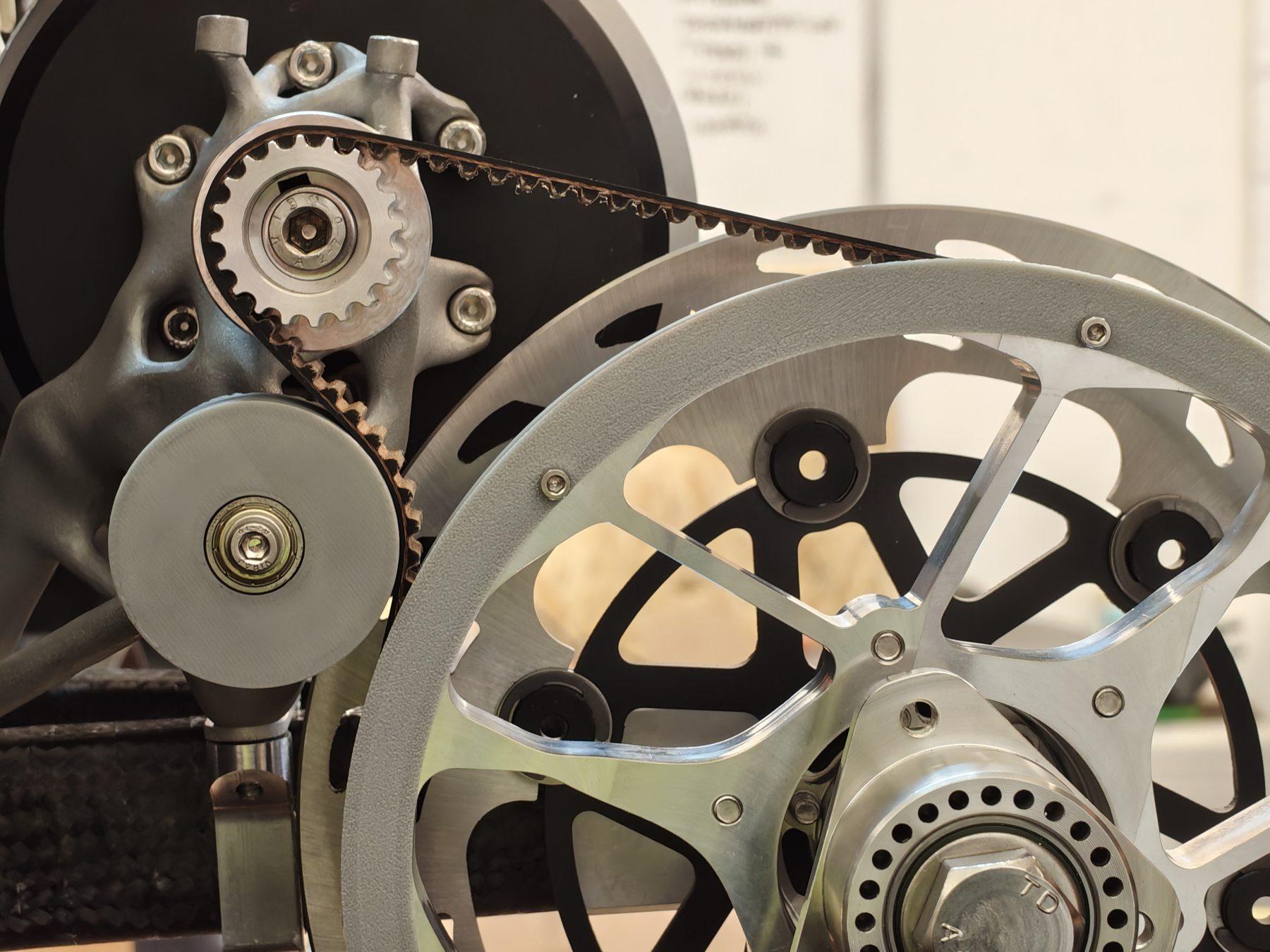
FIG. 01 — PYRFOROS IV drive motor & belt drivetrain
Architecture & sizing
PYRFOROS III drove its axle directly; PYRFOROS IV introduced a 6:1 belt reduction between the motor and the axle. The ratio wasn't guessed — it was selected by overlaying the motor's efficiency map onto the lap-simulation velocity profile for the Poland circuit, so the motor operates at or near its peak-efficiency point for the majority of the lap.
Running the motor at its best operating point meant a smaller motor could do the job, and that decision cascaded: powertrain mass dropped by 20 kg against the previous platform. The motor itself is a team design — the electrical group carried the electromagnetic design, power electronics, and controller firmware, while the mechanical side of the motor and the drivetrain layout around it sat with me.
The lap simulation bears this out directly: across a full 191-second simulated lap, the motor spends 38% of its time coasting at zero throttle around 1,600–1,700 RPM — almost exactly the 1,620 RPM the 6:1 ratio produces from the car's calculated 270 RPM wheel speed at cruise. The burst-and-coast pattern in the heatmap below (throttle in short bursts, then coast) is the team's Eco-marathon driving strategy showing up directly in the motor's operating data.
View top operating points as a table
| RPM | Torque [Nm] | Time [s] | % of lap |
|---|---|---|---|
| 1600–1700 | 0–0.5 | 73.0 | 38.0% |
| 1200–1300 | 0–0.5 | 16.3 | 8.5% |
| 1800–1900 | 0–0.5 | 15.1 | 7.9% |
| 1700–1800 | 0–0.5 | 14.4 | 7.5% |
| 1600–1700 | 0.5–1 | 10.5 | 5.5% |
| 800–900 | 0–0.5 | 8.4 | 4.4% |
| 700–800 | 0–0.5 | 7.4 | 3.9% |
| 900–1000 | 0–0.5 | 7.2 | 3.7% |
Mechanical design & serviceability
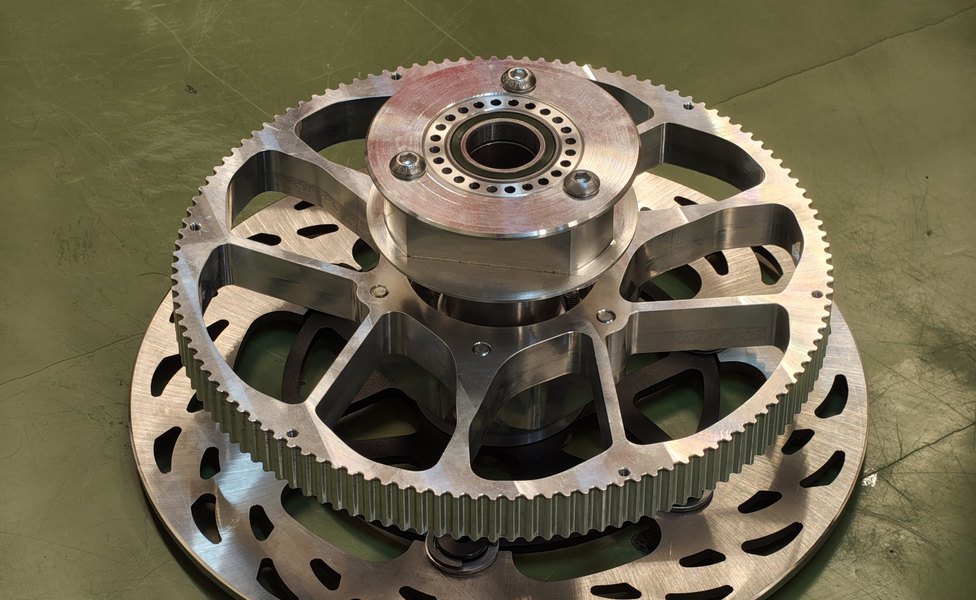
I carried the motor's mechanical design and the drivetrain layout that packages it into the car — 18 tracked part numbers at 4.80 kg for the drivetrain subsystem, under the same configuration-controlled BOM as the rest of the vehicle. The motor itself is 4,000 g; the generatively-designed bracket carrying it is 3D printed aluminium with machined mounting faces, at 181 g — the printer builds the organic load-carrying lattice, and the surfaces that actually have to fit are machined afterward.
Splitting the part that way is a rule carried over from a different team and a different car: a printed 316L mount at TUCer arrived 12.7× outside tolerance because it was released as geometry with no tolerances, datums or machining stock. Nothing of that part is in this one; the specification practice it produced is.
The rotor mounts to its shaft with an interference (shrink) fit rather than a keyway or spline — sized to carry up to 36.3 Nm through a 15.4 MPa contact pressure, assembled with a calculated thermal differential rather than a press. It's a cleaner load path for a rotating assembly at these torques, with no stress-raising keyway slot cut into the shaft.
Serviceability was a design input, not an afterthought: the belt drive is fully accessible and replaceable without any structural disassembly, so routine drivetrain maintenance and belt renewal between competition attempts never touch the monocoque.